
 Is Radiation Therapy Right for Me?
Radiation therapy is one of the most effective and commonly used treatments for localized and locally advanced prostate cancer. It can also be used after prostate surgery or when cancer returns.
Importantly, cure rates for radiation are generally equivalent to surgery. For men with intermediate- or high-risk prostate cancer, radiation is often paired with hormone therapy (androgen deprivation therapy, or ADT) to improve outcomes.
Types of Radiation Therapy
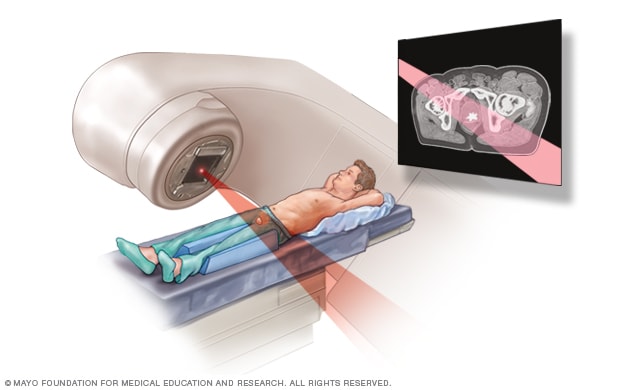
1. External Beam Radiation Therapy (EBRT)
-
Delivers radiation from outside the body using precise imaging and targeting.
-
Given 5 days per week for 4 to 7 weeks.
-
Advanced forms include IMRT (Intensity-Modulated Radiation Therapy) and IGRT (Image-Guided Radiation Therapy).
2. Stereotactic Body Radiation Therapy (SBRT)
-
Shorter course: 5 treatments over 1–2 weeks.
-
Uses advanced imaging for sub-millimeter precision.
-
A good option for certain low- and intermediate-risk patients.
3. Low-Dose-Rate (LDR) Brachytherapy
-
Tiny radioactive seeds are implanted directly into the prostate.
-
Delivers radiation over weeks to months.
-
Often done as a one-time outpatient procedure.
4. High-Dose-Rate (HDR) Brachytherapy
-
Temporary rods are placed into the prostate and high-intensity radiation is delivered in one or more brief sessions.
-
Can be used alone or with EBRT
What to Expect During Treatment
-
Radiation treatments are non-invasive and painless.
-
Each session typically takes 10–15 minutes.
-
There’s no anesthesia, no cutting, and most men continue daily activities during treatment.
-
For brachytherapy, a short outpatient procedure is required under anesthesia.
Common Side Effects of Radiation Therapy
Side effects depend on the type of radiation, prostate size, anatomy, and combination with hormone therapy. Here’s a breakdown:
Short-Term Side Effects (During or Shortly After Treatment)
| Symptom | Frequency | Notes |
|---|---|---|
| Urinary frequency or urgency | Common (30–50%) | Usually temporary |
| Radiation cystitis (bladder irritation) | Common | May cause burning or bleeding |
| Bowel changes (loose stools, urgency) | 20–30% | Improves over time |
| Fatigue | Very common | Typically mild |
| Rectal irritation or discomfort | 15–25% | Often mild and manageable |
Long-Term Side Effects (Months to Years After Treatment)
| Complication | Risk Range | Notes |
|---|---|---|
| Urethral stricture | 2% (EBRT) – up to 32% (brachytherapy) | Scar tissue can narrow the urethra |
| Radiation cystitis | 5-18% long-term | Chronic bladder inflammation and blood in urine |
| Ureteral stricture | Rare | Uncommon unless extensive pelvic radiation used |
| Secondary bladder cancer | 0.5–1% increased lifetime risk | Slight increase over background risk |
| Secondary rectal cancer | 0.5–1% increased lifetime risk | More likely after pelvic EBRT |
| Fecal incontinence | 1–14% | More common with high-dose rectal exposure |
| Erectile dysfunction | Up to 40–50% over time | Also affected by age and other health factors |
Radiation + Hormone Therapy
For patients with intermediate or high-risk prostate cancer, radiation is often combined with hormone therapy for 6–36 months. Hormone therapy lowers testosterone, which can shrink the cancer and make radiation more effective.
Common hormone therapy side effects include:
-
Hot flashes
-
Decreased libido or erectile function
-
Fatigue
-
Mild weight gain or muscle loss
-
Mood changes
These typically improve once hormone therapy is stopped.
Choosing Between Surgery and Radiation
Both surgery and radiation offer excellent chances of curing prostate cancer. The decision often comes down to:
-
Cancer risk level
-
Age and overall health
-
Personal preference
-
Willingness to tolerate specific side effect profiles
Our team will help you weigh your options and connect you with an experienced radiation oncologist if radiation is right for you.
Want to Learn More?
If you’ve been diagnosed with prostate cancer, we’ll help you understand your treatment options—including surgery, active surveillance, and radiation therapy.
Call us at 207-518-6600
Request an appointment online